> For the complete documentation index, see [llms.txt](https://support.suptask.com/llms.txt). Markdown versions of documentation pages are available by appending `.md` to page URLs; this page is available as [Markdown](https://support.suptask.com/integrations-automations-and-workflows/email-ticketing-setup/email-customization.md).
# Email Customization
Customize email layout and behavior
You can customize how the Email integration works and the layout of the emails that are sent.
### Settings
Emails can be configured with different settings that allows you to customize the behavior towards your requesters.
#### Confirmation email
By default a confirmation email is sent back to the requester. You can optionally disable this.
***
### Layout
Emails sent from Suptask back to the requester can have the layout customized to your requirements, such as your own branding and name.
We allow you to customize many parts of the, from the text content to the colors.
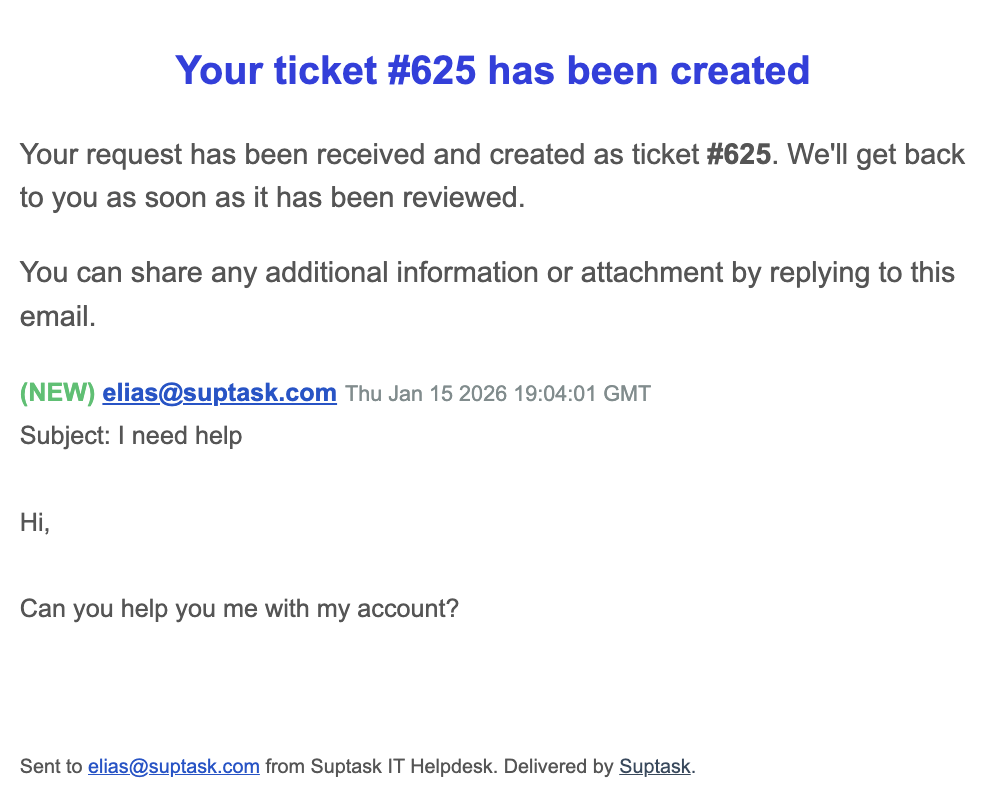
Example on how the default email looks when a new ticket is created
#### Colors
```
background: #f4f4f4
containerBackground: #fff
header: #333
content: #000000
footer: #000000
ticketTitle: #faafe1
ticketText: #faa555
newLabel: #5a2211
border: #3d9cdc
suptaskLink: #34495e
replyAbove: #b5b5b5
```
#### Text content
```
titleCreated: Your ticket #{{ticket.ticketNumber}} has been created
received: Your request has been received and created as ticket #{{ticket.ticketNumber}}. We'll get back to you as soon as it has been reviewed.
additionalInfo: You can share any additional information or attachment by replying to this email.
newLabel: (NEW)
titleClosed: Your ticket #{{ticket.ticketNumber}} has been closed
titleUpdated: Your ticket #{{ticket.ticketNumber}} has been updated
updateMessage: Your ticket has been updated. Here are the most recent replies:
recentRepliesLabel: Recent Replies
sentTo: Sent to {{message.author}} from {{companyName}}. Delivered by
deliveredBy: Suptask
deliveredByUrl: https://www.suptask.com
```