> For the complete documentation index, see [llms.txt](https://support.suptask.com/llms.txt). Markdown versions of documentation pages are available by appending `.md` to page URLs; this page is available as [Markdown](https://support.suptask.com/setup-and-configure/forms-and-fields/tags.md).
# Tags
How to use Tags with your tickets
### Tags
Tags is a default field which you can optionally use on your Forms. It allows Agents to further categorize your tickets by applying different tag values on tickets.
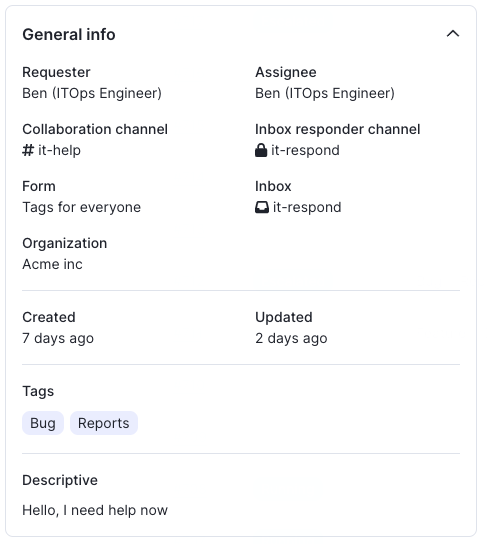
You can apply one or many Tags on a ticket:
Apply Tags by editing tickets.
The Tags can be filtered out on the Tickets overview to analyze tickets further.
**Example use case:**
* Apply a Bug-tag if the ticket was related to a software bug.
* Apply the Wifi-tag for a ticket that ended up to the Wifi
* Apply the HR tag in case the ticket required help from HR.
You can manage your Tags from the [Manage fields page](https://app.suptask.com/inboxes/fields) by editing the Tags field.
***
### View and Filter on Tags
You can view all tags for each ticket both on the Web and in Slack. There is also filtering capabilities available to create overview based on filtered tags.